
Scroll through social media today, and you’ll notice something different some of the most popular “people” aren’t even real.
Welcome to the world of AI virtual influencers.
You can do this because digital creators are transforming the way that brands interact with consumers. They don't age, don't sleep, and don't make mistakes that could damage a brand's reputation.
That’s exactly why brands are shifting toward AI-driven influencers.
Compared to using traditional influencers, many companies actually save up to 70%.
And the outcome? AI influencer campaigns often see much higher engagement than human creators.
Virtual influencers can use AI to post 24/7, engage globally, and always stay on-brand.
From building your AI virtual brand to making it profitable, this guide will teach you 9 successful AI virtual influencer marketing strategies.
What is AI Influencer Marketing?
AI influencer marketing means using digital characters to promote products, grow an audience, and create content online. These influencers are artificial intelligence (AI)-powered virtual avatars rather than actual people.
How do they work?
> AI creates images, videos, and even voice
> Automation handles posting and replies
> Content is produced quickly and at scale
The Key Difference
Human influencers rely on personal authenticity and lived experience; AI influencers rely on narrative consistency and hyper-targeted data.
Why AI Virtual Influencers Are Dominating Marketing
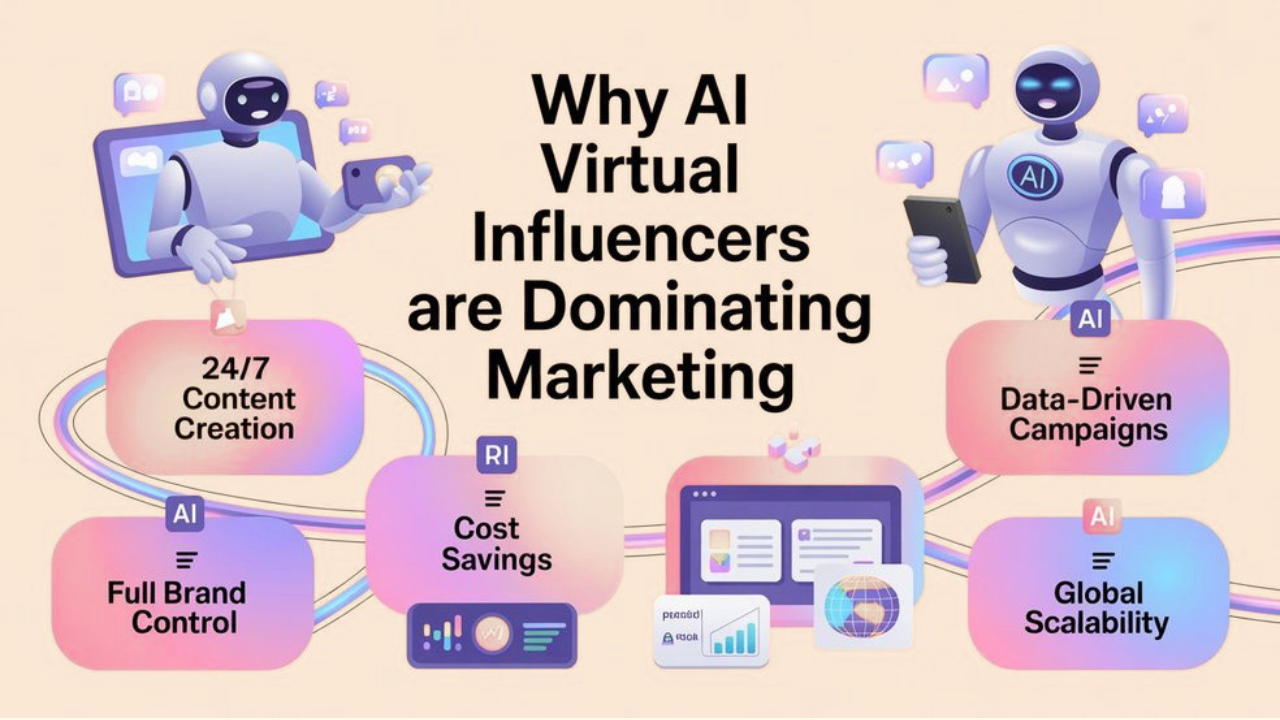
Before diving into the strategies, it's worth understanding why this shift is happening so fast. Five structural advantages are driving brand adoption:
1. 24/7 Content Creation and Engagement
A virtual influencer can post at optimal times across every time zone simultaneously. There's no "I'll get to it tomorrow." Content pipelines run constantly, keeping audiences engaged without burnout.
2. Dramatic Cost Savings
Working with a top human influencer can cost $50,000–$500,000+ per campaign, plus agent fees, production costs, and contract management. Virtual influencers bring that down by 70%, and the cost curve continues to fall as AI tools improve.
3. Full Brand Control, Zero PR Risk
Brands specify exactly what the influencer says, wears, and promotes. There are no rogue opinions, no personal controversies, no unexpected partnerships with competitors. Every piece of content is approved before it goes live. Create realistic digital versions and customized posts for influencers and platforms using Imimic.
4. Data-Driven Campaigns at Scale
AI systems track engagement in real time, A/B test content formats automatically, and adjust messaging based on audience response. The feedback loop is tighter and faster than any human-managed campaign.
5. Global Scalability Without Proportional Cost
You can modify a single virtual persona for different markets, languages, local trends, and regional aesthetics without the high cost of hiring influencers for each market.
9 Proven AI Influencer Marketing Strategies
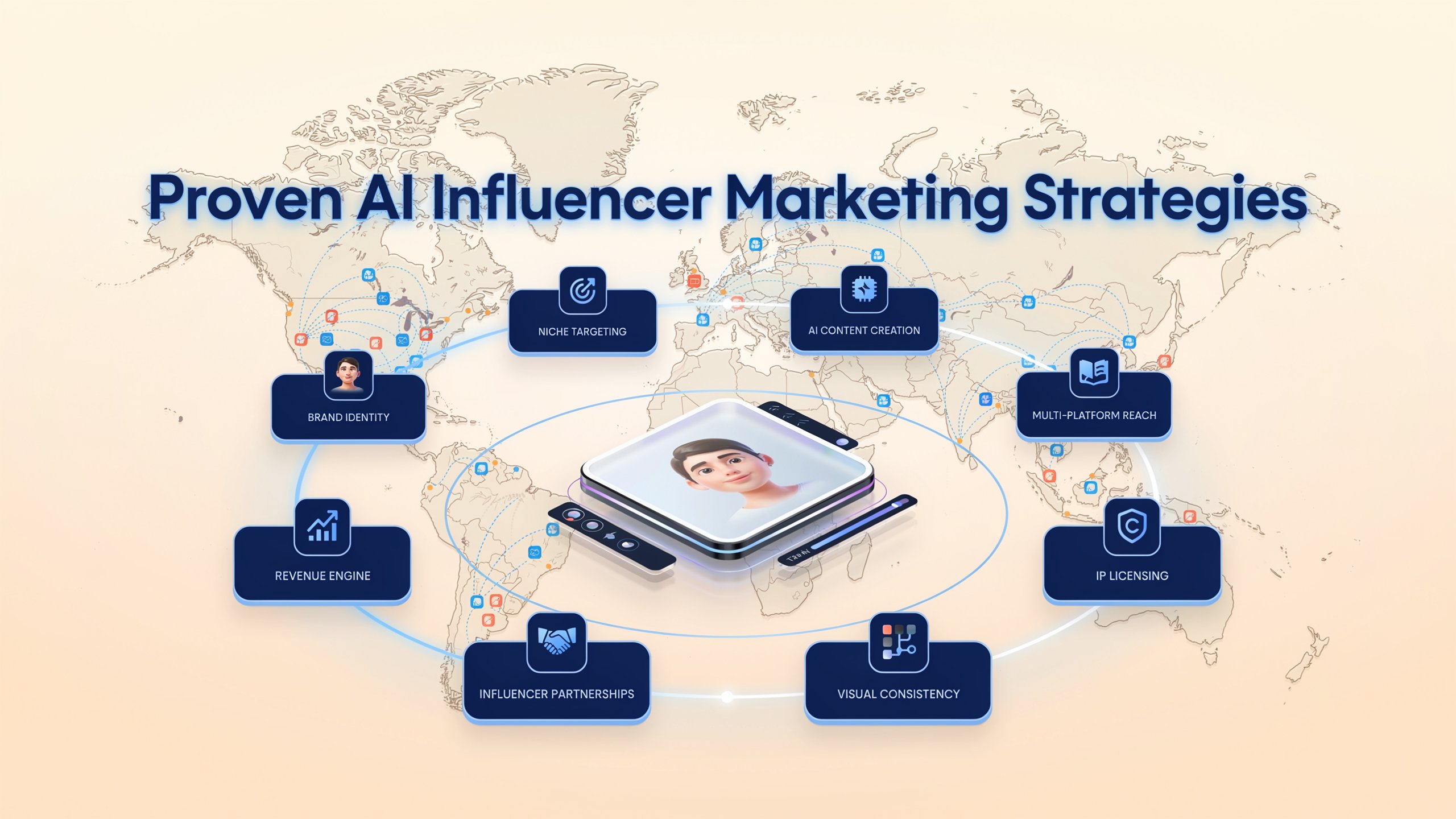
Strategy 1: Create a Strong Virtual Brand Identity
Creating a virtual influencer is not just about visuals, it starts with a clear identity. Without it, your content may look good but won’t feel real or memorable.
Before you create anything, define your character. Think of your AI influencer as a real person with a clear profile.
Start with a simple character profile before creating content:
- Name
- Background
- Personality
- Likes and dislikes
Then define the style, fun, bold, luxury, or minimal, and choose one niche, such as fitness, tech, or fashion.
Stay consistent with tone and visuals. This is your base with it build the character first, then create content.
Strategy 2: Focus on Niche Audience Targeting
Influencers in the mass market are no longer relevant. The successful virtual brands of today own and totally control a particular niche. So, start simple:
- Pick a specific audience
- Create content only for them
AI influencers do best in focused niches, like eco-friendly fashion or cyberpunk photography. As a result, a small and active audience is more valuable than a large and silent one.
Strategy 3: Utilize AI Tools to Produce Content
The process of creating content on a large scale is expedited and made simpler with the aid of artificial intelligence. AI enables you to:
- Create images and videos
- Write captions in seconds
- Schedule and automate posts
Your workflow can be made simpler with the help of a tool like Imimic, which enables you to quickly create high-quality images, brief videos, and captions that are ready for use.
This means you can post regularly without feeling overwhelmed or burned out.
Strategy 4: Build a Story Around Your AI Influencer
A clear story makes your influencer feel more real and relatable. When people understand the journey and personality, they connect more and engage more. Share your influencer’s story through content. Show who they are and what they care about.
Here are the key parts to include:
➕ Origin — Where did they come from?
➕ Values — What do they believe in?
➕ Growth — Show change over time to keep things interesting.
Strategy 5: Leverage Multi-Platform Presence
Being active across a variety of platforms is crucial for this reason. It increases your audience and safeguards your brand. For instance, a single piece of content can be transformed into the following:
- A TikTok video
- An Instagram Reel
- A YouTube Short
- A LinkedIn post
- Even a newsletter mention
This way, you get more value from the same effort and stay visible across different audiences.
Strategy 6: License Your Virtual Persona’s IP
Here's where AI virtual influencers become valuable resources, so you can:
- License your character to brands
- Allow companies to use your influence in campaigns
- Sell visual identity and voice
But don’t skip protection. Secure your work with:
- Trademarks
- Licensing agreements
- Clear usage rights
This turns your virtual influencer into a real product, so protect it properly while you grow it.
Strategy 7: Maintain Visual Consistency with AI
Visual consistency is one of the most important technical aspects of creating a successful virtual influencer. Maintaining consistency fosters trust; you can use:
- LoRA + Stable Diffusion models
- Optimized datasets for your character
The tip: Concentrate on short-form content (Reels, TikToks, Stories), as these outperform static posts in terms of engagement and discovery.
Strategy 8: Collaborate with Real Influencers (Hybrid Strategy)
Human influencers bring something AI can’t fully replace with trust and authenticity. At the same time, AI virtual influencers provide consistency, control, and high-quality content.
This mix works because:
- Humans add credibility and social proof
- AI keeps content consistent and always active
- The collaboration itself grabs attention
When you blend both, your brand feels more real while still staying scalable.
Strategy 9: Turn Your AI Influencer into a Revenue Engine
The most durable AI influencer businesses don't rely on brand deals alone. They build a multi-revenue stack, because brand deal revenue is episodic, rate-negotiation intensive, and subject to platform changes.
Monetization opportunities include:
- Sponsored posts
- Brand partnerships
- Digital products (NFTs, merch, avatars)
- Affiliate marketing
- Subscription content
Platforms like imimc can help streamline monetization and campaign management, making it easier to scale your virtual brand efficiently.
Challenges & Risks of AI Virtual Influencer Marketing
A. Lack of Authenticity
AI influencers can’t fully match real human experiences, especially in sensitive topics.
👉 Use them in visual niches, and combine with humans where trust matters.
B. Ethical & Transparency Issues
Not disclosing AI use can break trust and harm your brand.
👉 Be clear, mention it in bios, and use tags like #AIInfluencer.
C. Audience Trust Gaps
Not all audiences accept AI influencers equally across regions and age groups.
👉 Know your audience and respond openly to feedback.
D. Over-Automation Risk
Too much automated content can feel generic and less engaging.
👉 Focus on quality and keep content personal and meaningful.
Conclusion
AI virtual influencers are a scalable, economical, and effective marketing tool, not merely a novelty. The secret is to use AI strategically rather than merely
- Build a strong identity
- Focus on niche audiences
- Combine AI efficiency with human creativity
The most durable virtual brands combine the scalability and consistency of AI with the warmth, spontaneity, and authentic credibility of human creativity.
By building a virtual brand, you are creating a scalable, immortal asset that can work for you 24 hours a day.
Whether you use a suite like Imimc or build a custom stack, the key is to focus on the strategy and story, not just the technology.
Leverage Imimic for a consistent brand identity across all posts and content in any language.
Build the persona. Tell the story. Protect the IP. Stack the revenue. Own the market.
The future of AI virtual influencer marketing is synthetic, and the brands that understand that will write the rules for everyone else.
FAQs about AI Virtual Influencer Marketing
1. What is an AI influencer?
Ans: An AI virtual influencer is a digital character created with AI tools to promote products and create online content.
2. So, how much does it really cost to get started?
Ans: With tools like Imimc and open-source AI models, you can start with a very low budget. The main cost is time and strategy.
3. Is it legal to use AI influencers for brand deals?
Ans: Yes, provided you disclose the AI nature of the creator and have clear contracts regarding the IP rights.