
Not long ago, AI-generated characters were mostly basic animated faces used in short clips with limited expression.
Now things have changed.
AI influencers, also known as digital personalities, are popular on social media. Influencers with virtual AI, like Lil Miquela, have demonstrated that viewers can follow, interact with, and even trust non-human creators.
As a result, the market for AI influencers is expanding rapidly.
Current industry projections suggest the AI influencer space could grow to $37.8 billion by 2030.
Brands are no longer looking for random AI visuals. They want digital personalities that can post often, speak in one clear voice, appear in campaigns, and keep the same visual identity across every platform.
This shift is driven by the increasing demand for consistent and scalable content.
A digital personality does not require scheduling, reshoots, travel, or repeated creator negotiations. It can act as a full-time brand asset, available 24/7, and provide a scalable way to support marketing, storytelling, and product promotion.

Whether you own a solo brand, an online store, or a marketing agency, these 7 tools will assist you in creating a digital influencer who fits your brand and connects with your audience.
What Is an AI Influencer Generator?
An AI influencer generator is a software platform that uses artificial intelligence to create and operate a virtual persona, a digital human that looks, speaks, and behaves like a real person creator.
Unlike simple stock imagery or one-off AI-generated photos, a true AI influencer generator produces a consistent character across many pieces of content: the same face, the same voice, the same aesthetic identity.
It's important to distinguish between three overlapping categories that often get conflated:

📍 AI Avatar Tools → You can envision polished, studio-style content ideal for corporate use, training, or tutorials by creating talking-head videos with pre-made or custom avatars.
📍AI UGC Tools → Generate “user-generated content”-style videos that feel real and relatable, which is ideal for ads, product reviews, and performance marketing campaigns.
📍 Virtual Influencer Platforms → You can build complete digital personalities, not just visuals, but identities. These tools handle images, videos, voice, captions, and long-term character consistency.
What do these AI Influencer Generator Tools actually produce?
→ Scroll-stopping images
→ Short-form videos (TikTok, Reels, Shorts)
→ Voice-synced clips
→ Auto-generated captions
→ Consistent, recognizable personas:
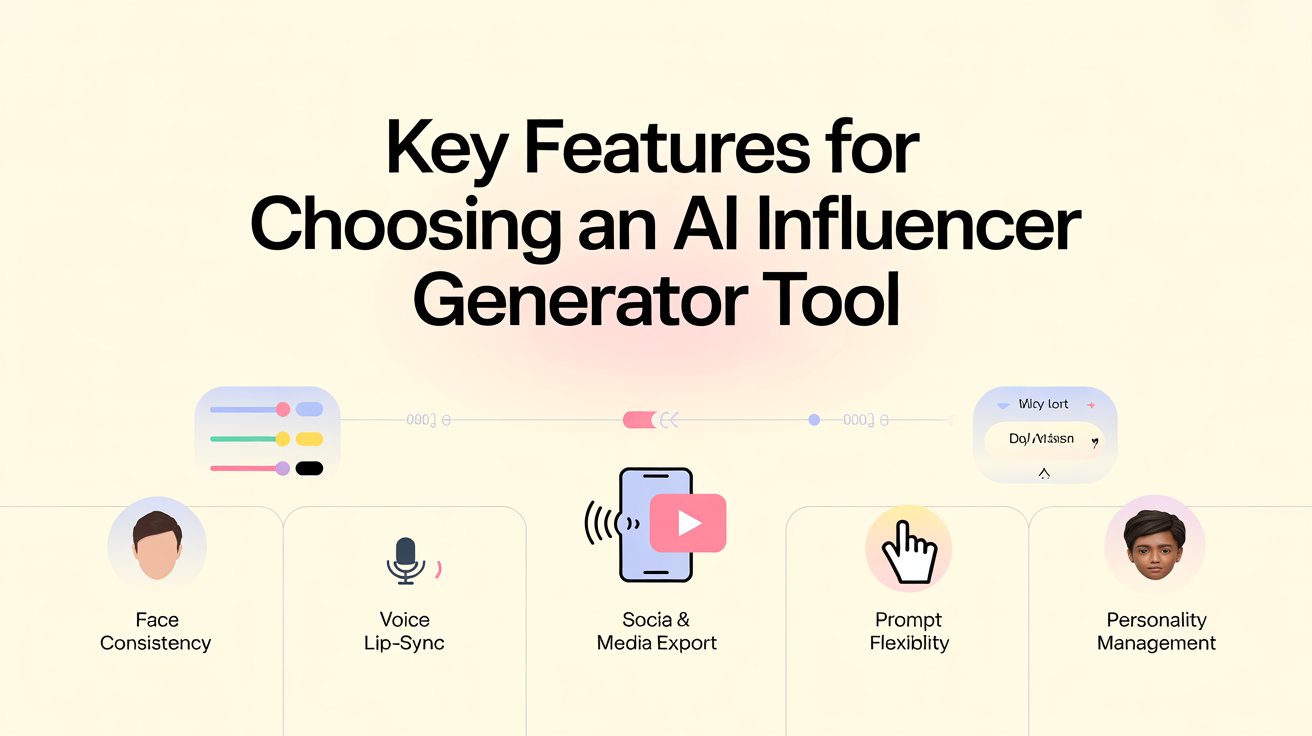
Key Features to Check Before Choosing an AI Influencer Generator Tool
A: Face Consistency
The character should maintain the same facial structure, expressions, and overall identity in every image or video. This helps the digital personality stay recognizable across content.
B: Style Control
A good tool should allow easy control over clothing, lighting, background, facial mood, and visual tone so the personality matches your content style.
C: Voice and Lip-Sync Support
Lip-sync accuracy and voice quality are essential for the AI Influencer Generator Tool to create videos that seem natural.
D: Social Media Export Options
The tool should support formats that fit short-form platforms, especially vertical content for reels, shorts, and similar video posts. Features such as digital twin cloning and the ability to save hours by simply uploading an audio file or script with tools such as imimic.
E: Prompt Flexibility
You can more accurately shape details and maintain outputs that are in line with your creative direction by using the proper prompt writing technique and improved prompt settings.
F: Personality Management
In order for the digital personality to feel steady over time, the best AI influencer generator tools assist in maintaining a consistent tone, appearance, and content style.
The Top AI Influencer Generator Tools for Building Digital Personalities
1. Imimic → Best End-to-End AI Influencer Creation Suite
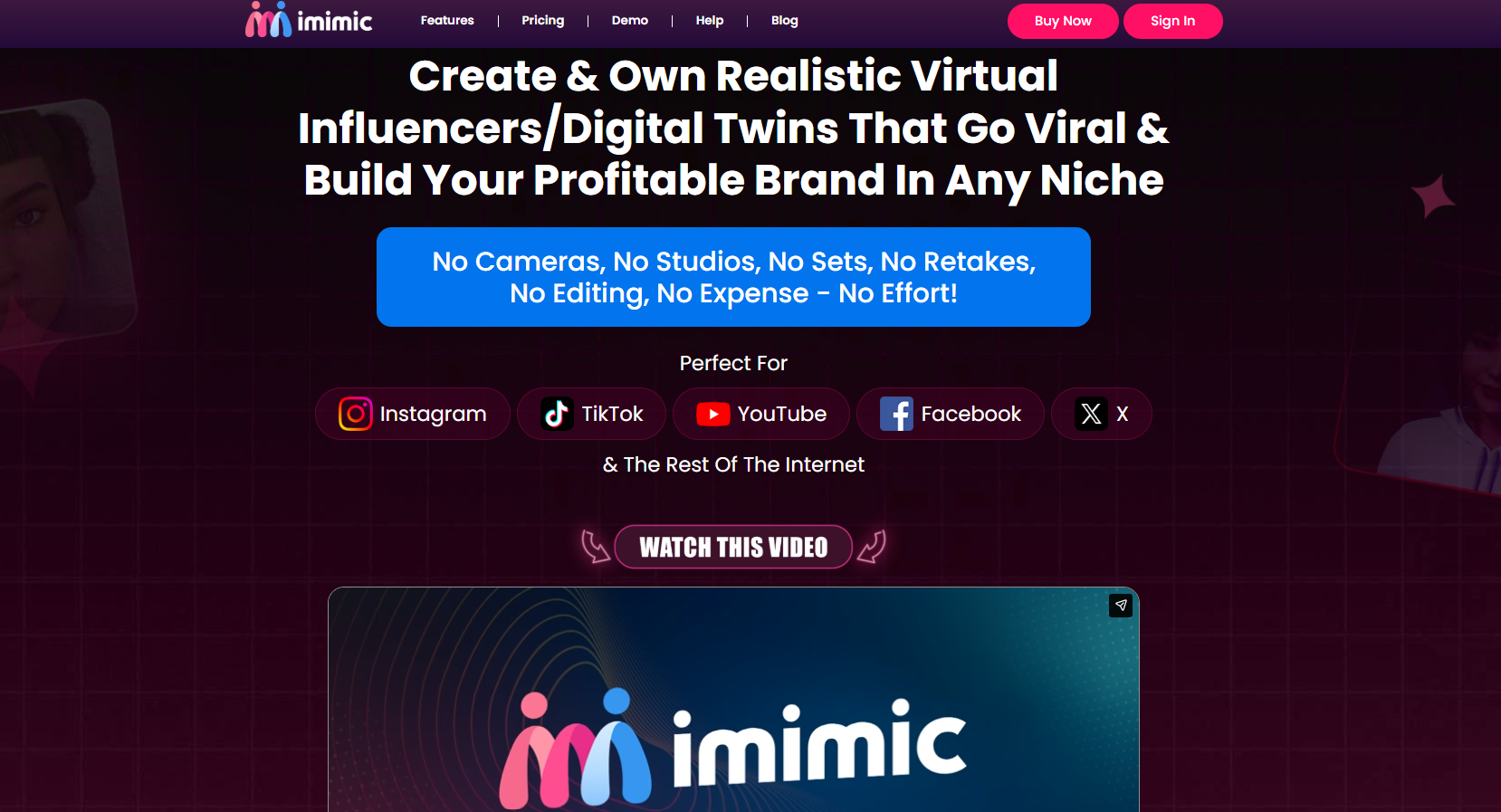
The primary purpose of the cloud-based platform Imimic is to produce an AI influencer generator, not business videos.
It combines image creation, video generation, AI voice, captions, and posting tools in one dashboard. A character memory feature helps keep the same identity across all content, so your digital influencer stays visually consistent.
Pros
→ Maintains character consistency across content
→ One-time pricing offers strong value (early access users)
→ All-in-one platform (images + video + voice + captions)
→ Includes commercial and reseller rights
→ Unique viral motion mapping for engaging content
Cons
→ Some features require upgrades
→ Image quality may not match premium tools
→ Not ideal for corporate content
→ Pricing may change later.
What Makes It Different?
✔️ Built only for AI influencers (not repurposed video tools)
✔️ Focus on content consistency + monetization
✔️ Designed for scaling entire influencer accounts, not just creating assets
Best For
→ Solopreneurs
→ Affiliate marketers
→ Faceless content creators
→ Small agencies building and monetizing AI influencer brands
2. HeyGen → Industry-Leading AI Avatar Video Platform
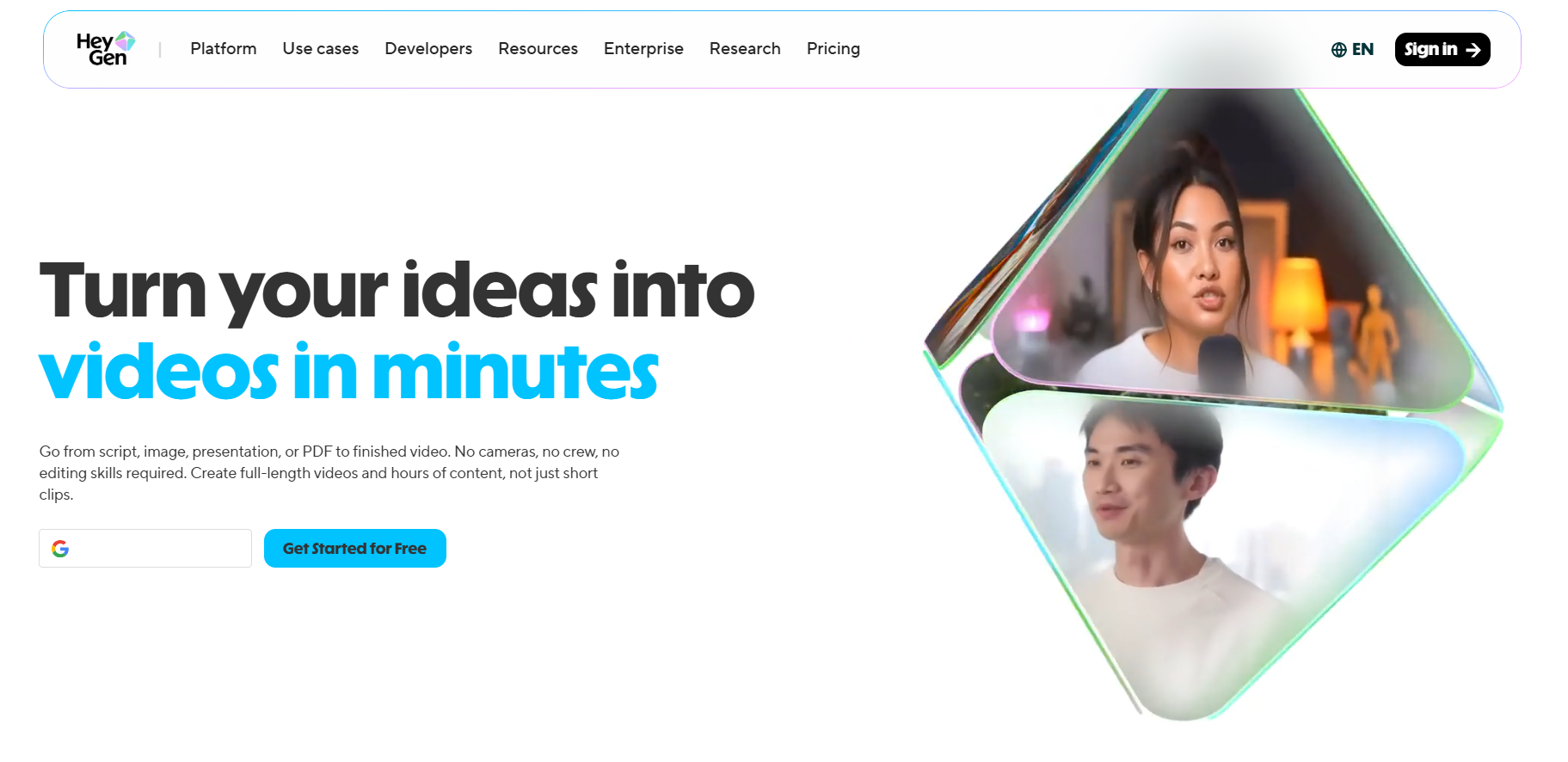
So many businesses trust HeyGen, one of the most well-known brands in AI video, and it's one of the fastest-growing tools in the world.
It transforms simple text scripts into professional, studio-quality videos using AI avatars, no camera, crew, or editing skills needed, and also realistic facial expressions, hand gestures, and natural eye contact.
Pros
→ Avatar IV delivers highly realistic motion and expressions
→ Support for international campaigns in multiple languages
→ Voice cloning is impressively accurate
→ Trusted by 100,000+ businesses worldwide
→ Integrates with tools like Zapier and HubSpot
Cons
→ Credit-based pricing can be confusing
→ Credits deplete quickly with advanced features
→ Expensive for casual creators
→ Avatars are mostly “talking head” style (limited lifestyle/fashion use)
What Makes It Different?
✔️ Industry-leading video realism and scalability
✔️ Strong focus on multilingual content production
✔️ Built for business-grade output, not just social media content
Best For
→ Marketing teams
→ Agencies
→ Businesses creating videos, product demos, and training content
→ Brands targeting multilingual/global audiences
3. ZenCreator → AI Influencer Generator with High Face-Swap Accuracy

In e-commerce and ad testing, where speed and variation are more important than deep personality development, ZenCreator has swiftly emerged as the preferred platform for creators who wish to create AI influencer content without having to pay up front.
Pros
→ Truly free tier (no credit card required)
→ Strong face-swap accuracy for consistent visuals
→ Batch generation for high-volume campaigns
→ Built-in social media formats (Instagram, TikTok, etc.)
→ Beginner-friendly and fast workflow
Cons
→ Primarily image-focused (limited video capabilities)
→ Lacks deep personality or storytelling features
→ Often associated with adult-content creator niches
→ Minimal brand/personality customization
What Makes It Different?
✔️ One of the few tools with a usable free tier
✔️ Combines speed + consistency for rapid content production
✔️ Optimized for testing multiple content variations quickly
Best For
→ E-commerce brands running A/B ad tests
→ Marketers needing fast, scalable visuals
→ Creators looking for a free entry point into AI influencer content
4. CreatifyAI → Converting AI Avatar Video Platform for Ads
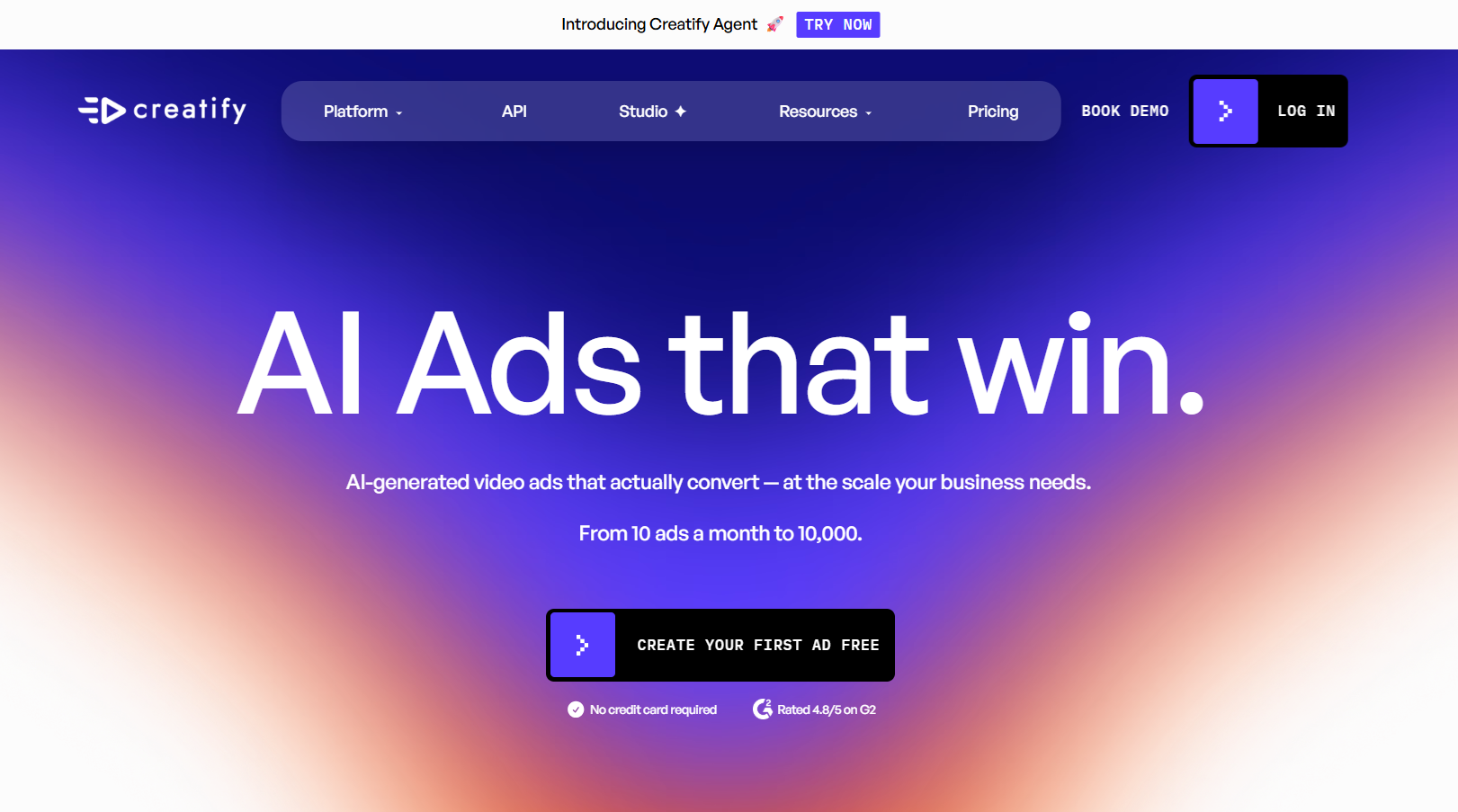
The primary objective of Creatify AI is to produce high-performing video advertisements at scale. It concentrates on what brands truly require conversion-driven AI influencer content, not just images. With batch mode for testing numerous hooks, avatars, and scripts, it can facilitate multi-market campaigns without the need for native speakers.
Pros
→ Aurora model delivers high-quality, realistic video output
→ 75+ language support for global campaigns
→ Batch generation for rapid A/B testing
→ Full commercial usage rights on paid plans
→ Large and active user base
Cons
→ Focused mainly on video (limited image/content variety)
→ Not ideal for long-term influencer personality building
→ Costs can scale quickly with high-volume usage
→ Requires structured scripting for best results
What Makes It Different?
✔️ Designed specifically for ad performance, not just content creation
✔️ Combines AI avatars + conversion testing workflows
✔️ Built to scale winning creatives across multiple markets fast
Best For
→ DTC brands
→ E-commerce sellers
→ Performance marketers running paid ads
→ Teams launching multilingual campaigns at scale
5. Glambase → AI Influencer Platform for Creation, Growth & Monetization
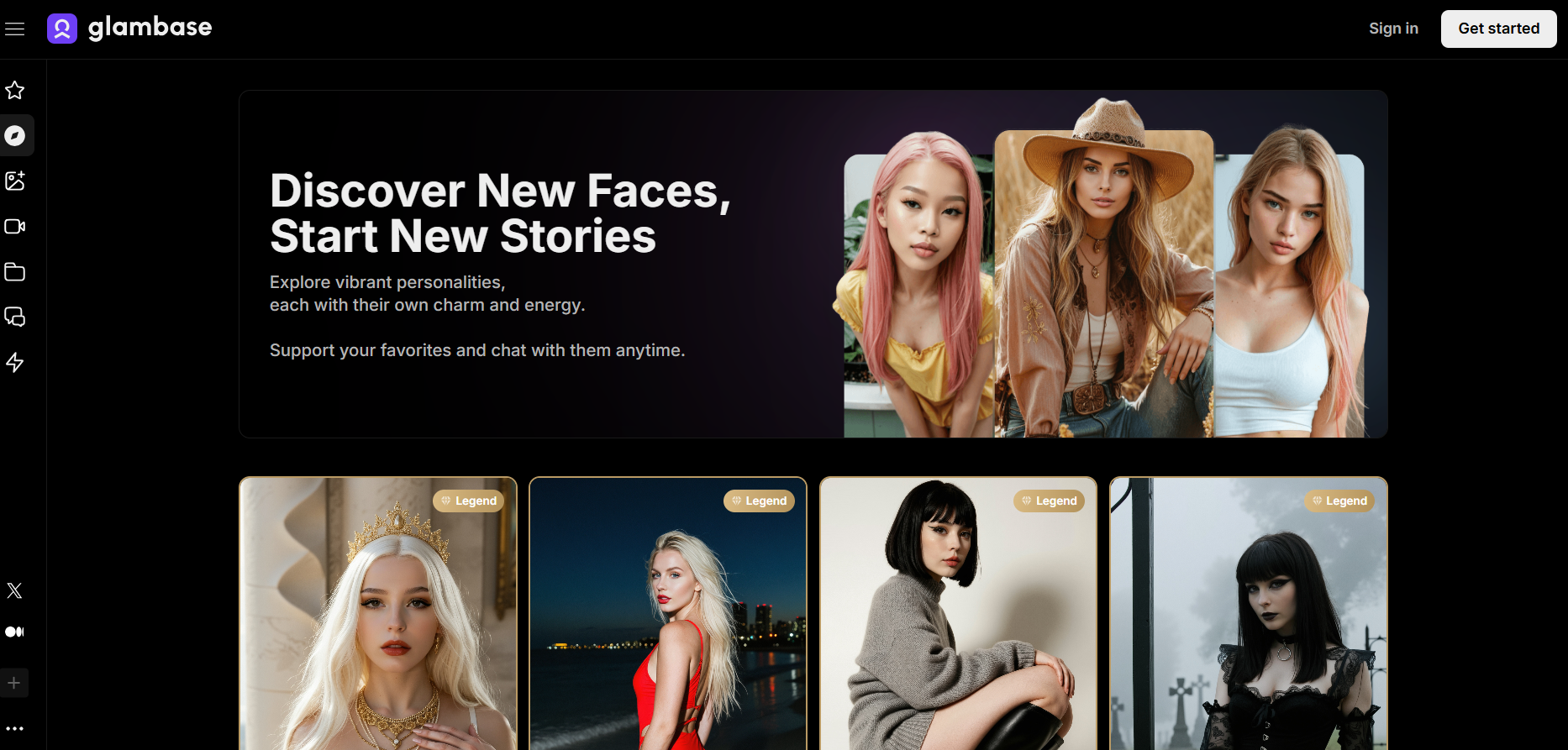
Beyond content creation, the Glambase AI Influencer Generator Tool is a full lifecycle platform for creating and profiting from AI influencers as digital assets. You build a full virtual persona (personality and appearance) rather than just creating posts, and the platform supports its autonomous growth and operation.
Pros
→ Autonomous fan interaction (no manual replies needed)
→ Built-in monetization and revenue tracking
→ Beginner-friendly, no technical skills required
→ Designed for long-term influencer growth
Cons
→ Some features still in early access
→ Long-term performance metrics are still evolving
→ Less control over detailed visual styling
→ Niche focus may not suit all brands
What Makes It Different?
✔️ Combines content + audience engagement + monetization in one platform
✔️ Focuses on passive income through AI influencers
✔️ Moves beyond tools → into AI-driven influencer businesses
Best For
→ Entrepreneurial creators
→ Digital marketers
→ Users building AI influencers as revenue streams
6. FotorAI Influencer → Simple, Browser-Based Tool for Quick Influencer Content
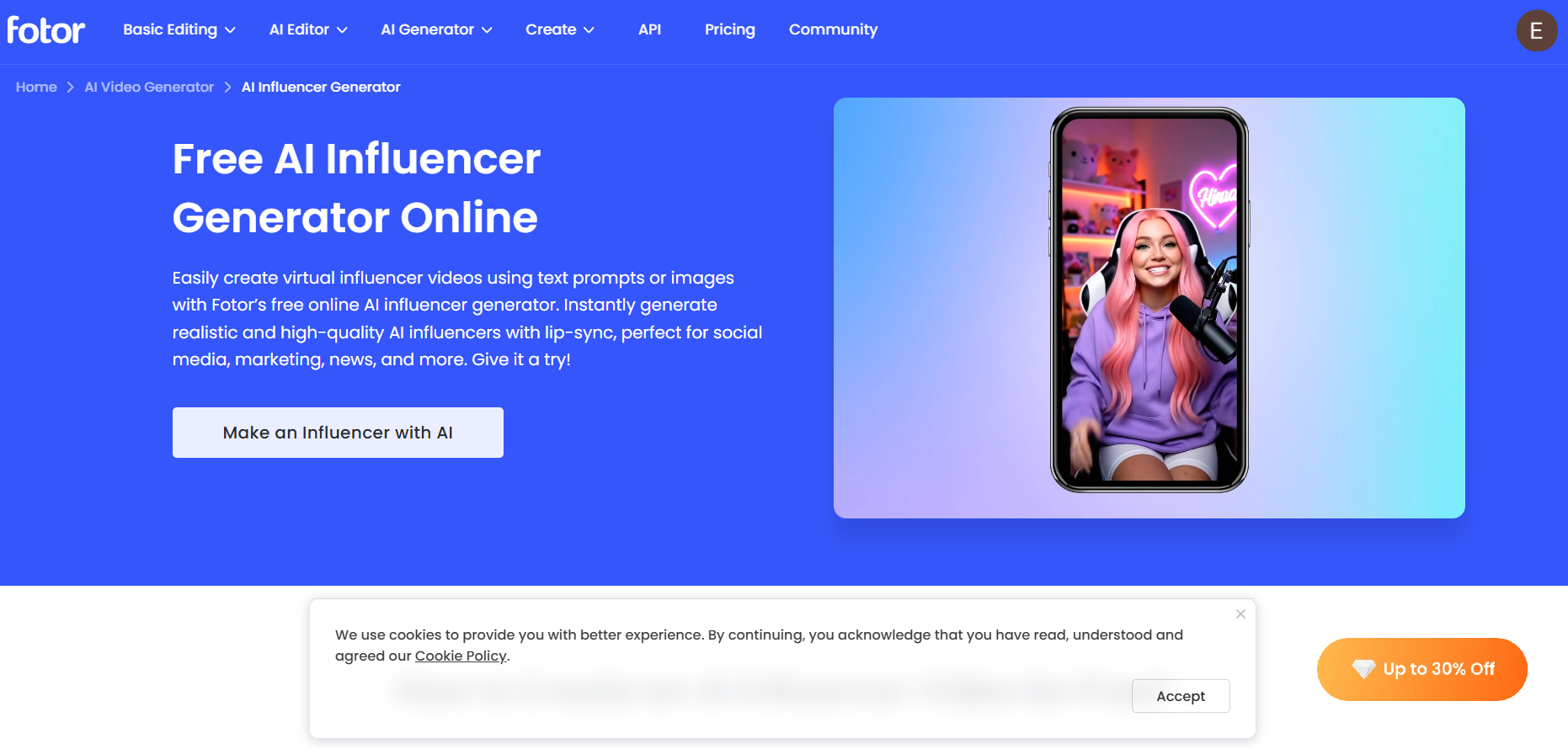
With an AI influencer generator tool made for speed and ease of use, Fotor enters the AI influencer market with its enormous user base. You can use simple text prompts to create influencer-style visuals; simply describe the setting, mood, or appearance, and Fotor will create the image.
Everything runs directly in your browser, so there’s no setup or installation required.
Pros
→ Extremely beginner-friendly (no design skills needed)
→ Fully browser-based (works on any device)
→ Built-in templates and social media formats
→ Image-to-video animation for static visuals
→ Affordable pricing for individuals
Cons
→ Weaker face consistency compared to advanced tools
→ Limited personality and brand control
→ Not ideal for large-scale or professional campaigns
→ Free plan includes watermarks.
What Makes It Different?
✔️ Focuses on speed + simplicity over complexity
✔️ Combines editing, design, and AI generation in one tool
✔️ Ideal for creators who want results without a learning curve
Best For
→ Solo creators
→ Social media managers
→ Anyone needing quick, polished AI influencer visuals
7. Rawshot AI → Precision AI Fashion Photography Platform
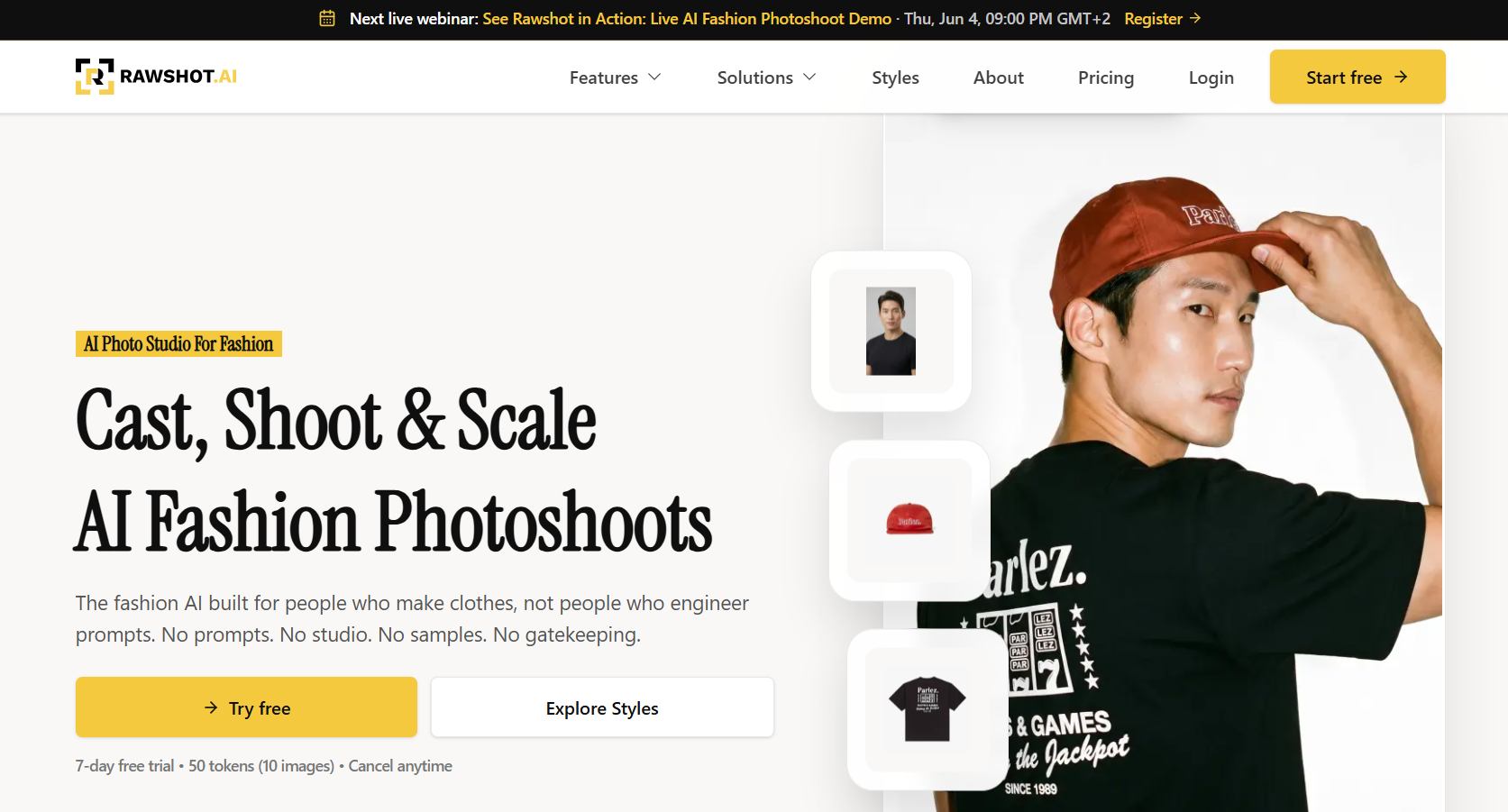
Designed specifically for fashion brands, e-commerce companies, and agencies that require studio-quality images at scale without the need for in-person photo shoots, Rawshot AI can assist as an AI Influencer Generator Tool.
Its standout capability is a 28-attribute synthetic model builder, allowing you to create unique AI models by adjusting features like body type, pose, and styling.
Pros
→ Highly customizable model creation (28 attributes)
→ Full commercial rights (no ongoing licensing fees)
→ Collaborative workflows for teams and approvals
→ Supports image-to-video conversion
Cons
→ Face consistency may vary across generations
→ No transparent public pricing (requires sales inquiry)
→ Limited demo access, no full free trial
→ A token-based system can require learning
What Makes It Different?
✔️ Focus on legal compliance + scalability
✔️ Advanced attribute-based model generation system
✔️ Built for enterprise-grade fashion content production
Best For
→ Fashion brands
→ Apparel retailers
→ E-commerce businesses
Trend Spotlight: What Makes a Digital Personality “Real” in 2026?
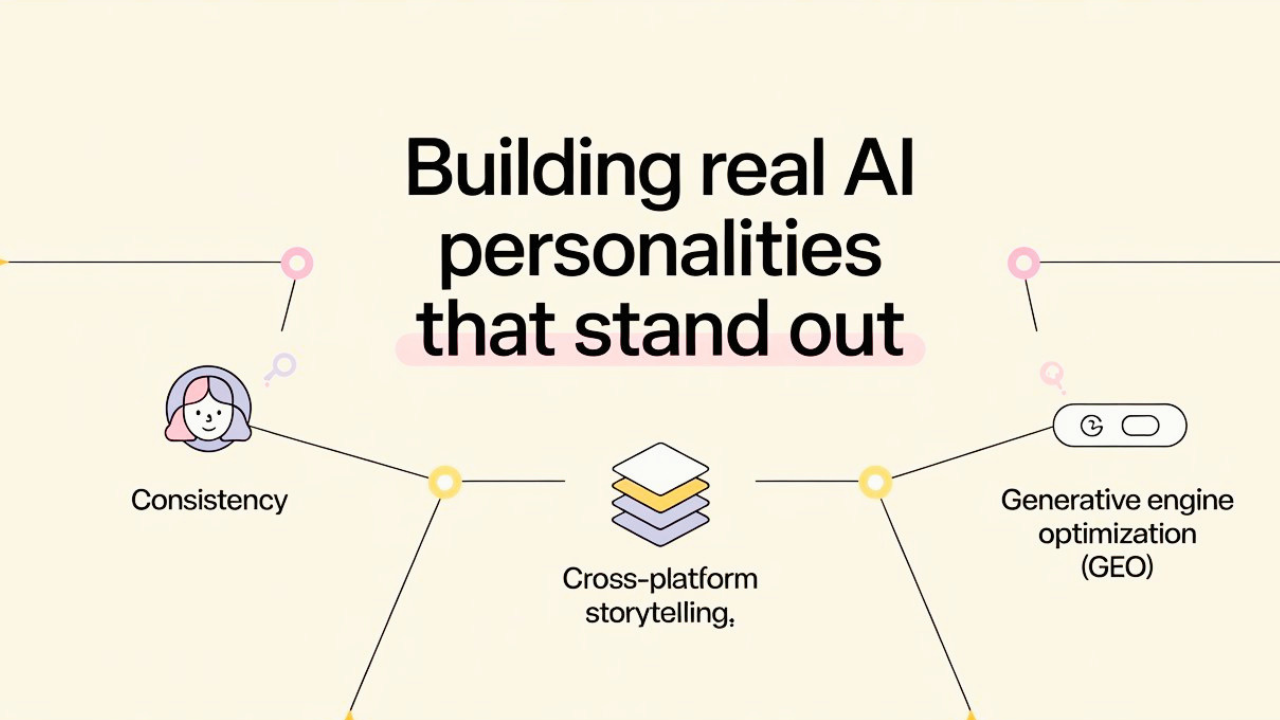
Creating a believable AI influencer in 2026 isn’t just about visuals; it’s about consistency, personality, and discoverability.
1. Consistency Is Queen
The biggest challenge is making sure the AI Influencer looks the same in every post.
This is where Low-Rank Adaptation comes in, training AI models with specific character details to ensure that the face, style, and overall appearance remain consistent across content.
→ Same face, same style, same vibe every time
→ Works across hundreds or even thousands of posts
This is referred to as "character memory" in some programs (like Imimic), but in others, you can train your own mod.
2. Cross-Platform Storytelling → The “Soul + Body” Stack
When using the best AI influencer generator tools, don't rely on just one; they combine to create a system that will undoubtedly work.
→ “Soul” (personality): ChatGPT or Claude for tone, captions, and storytelling
→ “Body” (visuals): Midjourney, Flux, or avatar generators for images
→ Voice & Video: ElevenLabs, HeyGen, CapCut for bringing content to life
When these layers work together, you create a full digital personality rather than a collection of random posts.
3. GEO → Generative Engine Optimization
The newest trend is making your AI influencer discoverable in AI search engines.
Platforms like Gemini, Perplexity, and ChatGPT now influence how people find information.
To stand out, creators are focusing on:
→ Consistent persona identity across platforms
→ Structured profiles and content
→ Building enough online presence to be recognized as a “real” entity.
Conclusion
The era of AI influencers has reached its pinnacle, redefining how digital personalities are created, scaled, and monetized.
What was once the responsibility of teams of creators, editors, and on-camera talent can now be built and managed by a single person using the appropriate tools.
Among the growing ecosystem, Imimic stands out as a powerful choice for building consistent, long-term AI influencers for brands, thanks to its character memory and all-in-one workflow.
Whether you're testing content ideas, building a niche audience, or scaling a brand, AI influencers give you the ability to move faster, stay consistent, and operate without traditional limitations.
Those who start now will be ahead of the curve as this space becomes more competitive and more refined.
Start experimenting, choose your tools wisely, and begin building a digital personality that works for you 24/7.
FAQs about AI Influencer Generator Tools
Q1: What exactly is an AI influencer generator, then?
Ans: An AI influencer generator is a program that makes a digital character for content like images, videos, and voice. It keeps the same face, style, and personality across posts.
Q2: Are AI-generated influencers legal?
Ans: As long as you keep ownership of any reference faces you use and don't impersonate real people without their consent, using an AI influencer generator for commercial purposes is allowed in the majority of jurisdictions.
On paid plans, the majority of platforms offer complete commercial rights.
Q3: How much does it cost to create an AI influencer?
Ans: Imimic offers a one-time launch price of about $47 for the front-end, while HeyGen's Creator plan costs $29 per month.